The questions
- 1
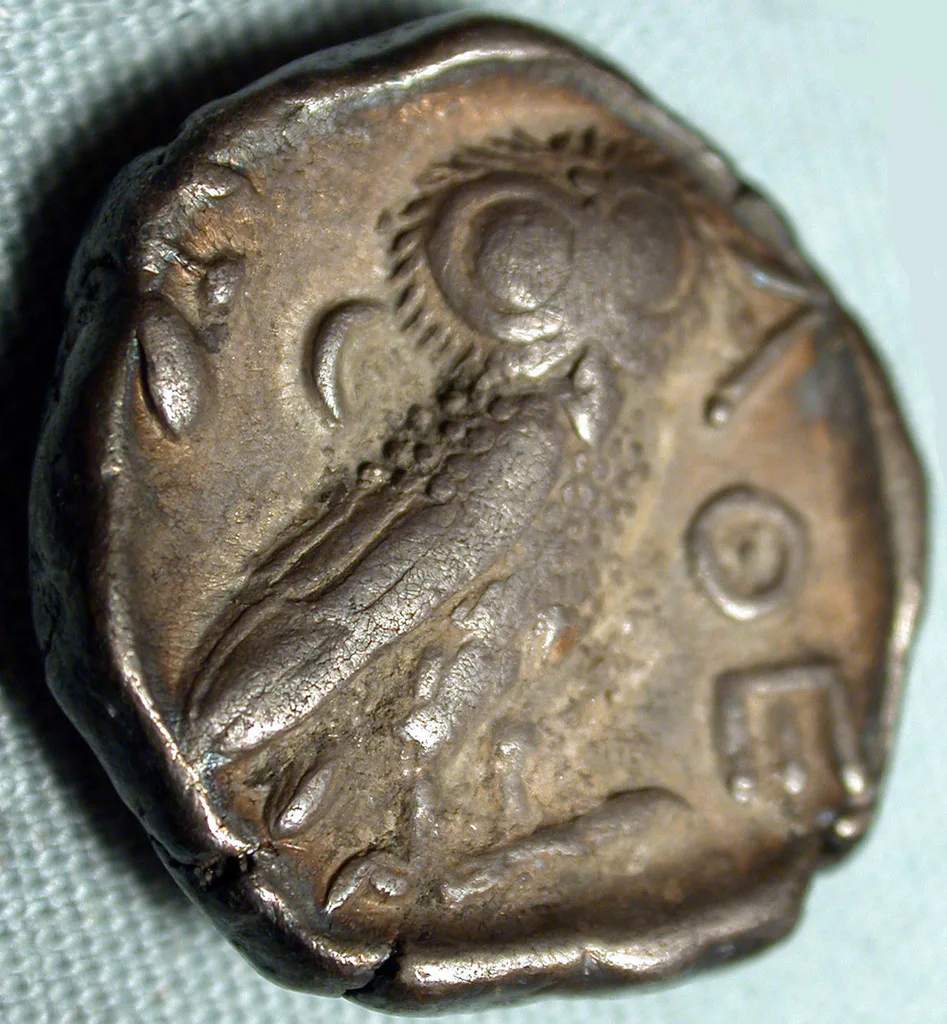
Look at this ancient Greek coin. Which bird is on it?
Answer: An owl
- 2
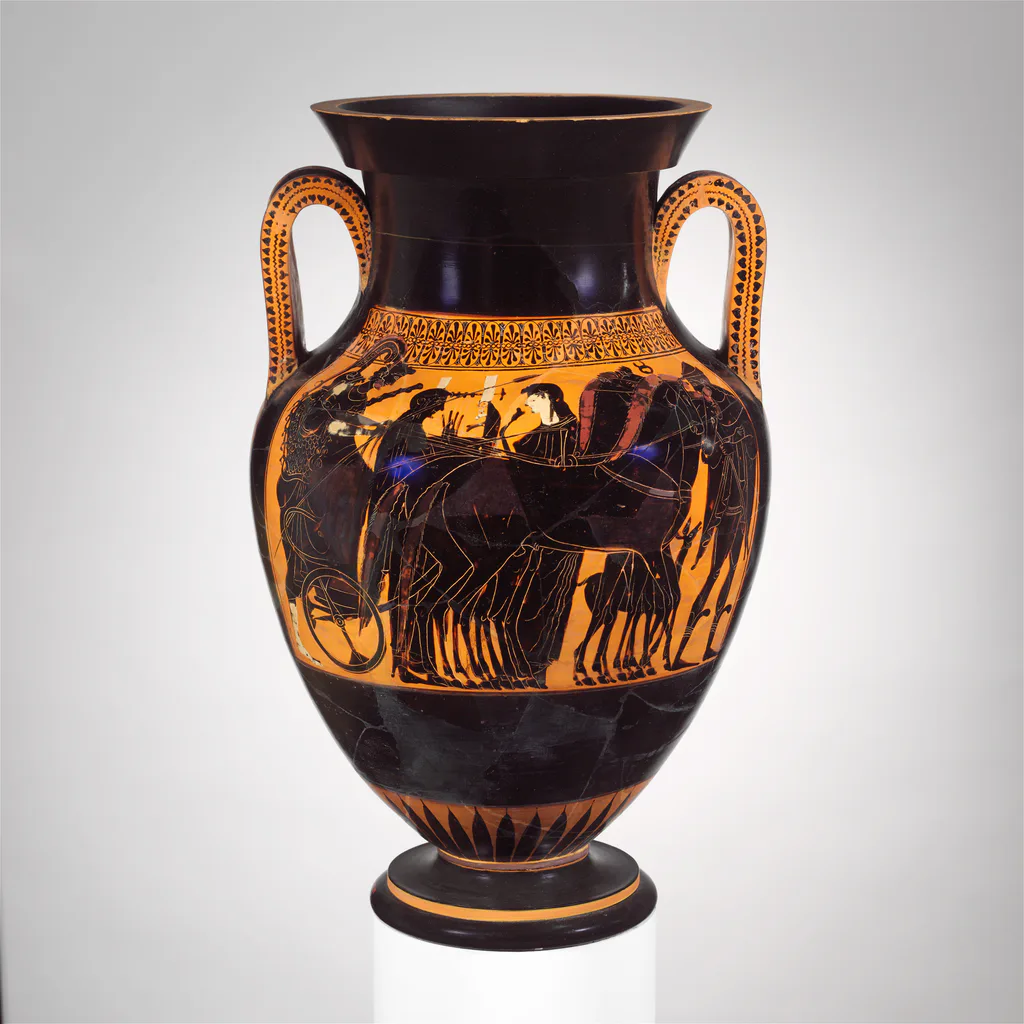
The Greeks kept oil and grain in tall jars like this one. What is this kind of jar called?
- A barrel
- A cauldron
- A goblet
- An amphora
Answer: An amphora
- 3
Which Greek city is famous as the birthplace of democracy?
- Athens
- Corinth
- Sparta
- Troy
Answer: Athens
- 4
The word "democracy" comes from Greek. What does it mean?
- Rule by a king
- Rule by the army
- Rule by the gods
- Rule by the people
Answer: Rule by the people
- 5
True or false: When democracy began in ancient Greece, women could vote.
- False: only men who were citizens could vote
- True: both men and women could vote
Answer: False: only men who were citizens could vote
- 6
At what age did Spartan boys leave home to start their tough army training?
- Seven
- Sixteen
- Ten
- Three
Answer: Seven
- 7
True or false: Spartan girls also ran races and trained to be strong.
- False: only boys in Sparta did sport
- True: girls in Sparta did sport too
Answer: True: girls in Sparta did sport too
- 8
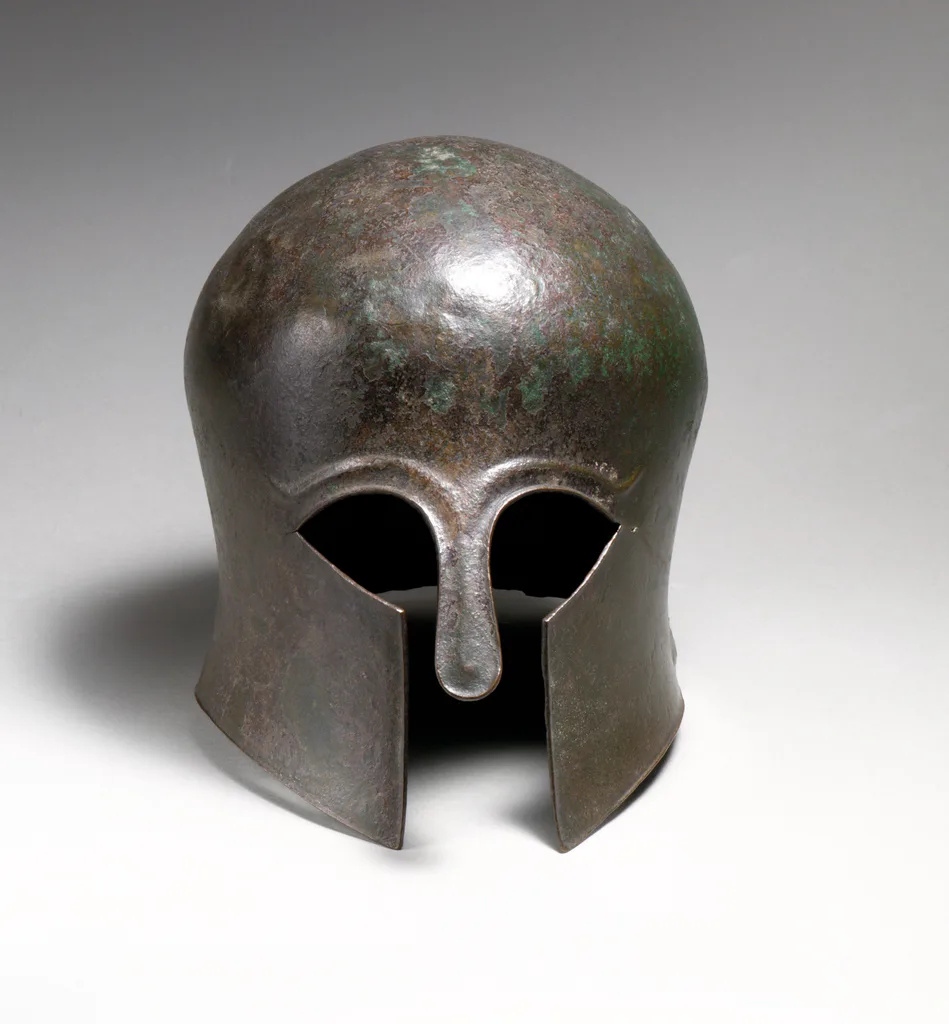
Greek foot soldiers wore bronze helmets like this one. What were these soldiers called?
- Hoplites
- Knights
- Legionaries
- Samurai
Answer: Hoplites
- 9
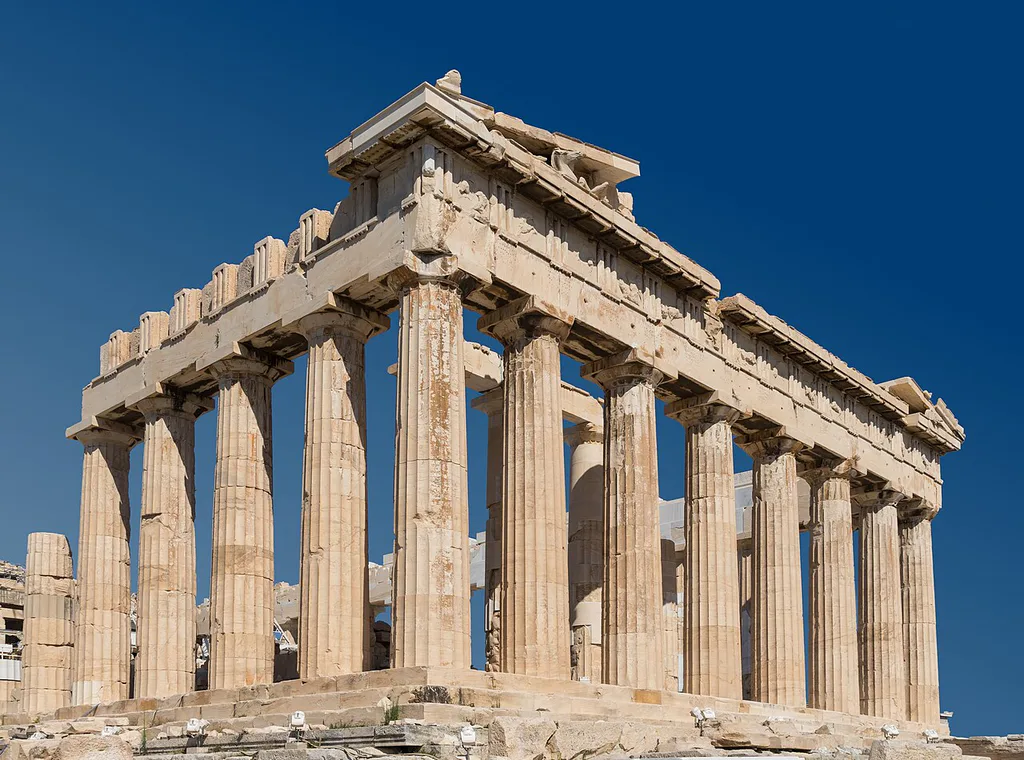
This famous temple stands high on a rocky hill. Which goddess was it built for?
- Aphrodite
- Artemis
- Athena
- Hera
Answer: Athena
- 10
The ancient Olympic Games were held to honour which god?
- Apollo
- Hermes
- Poseidon
- Zeus
Answer: Zeus
- 11
How often were the ancient Olympic Games held?
- Every four years
- Every ten years
- Every two years
- Every year
Answer: Every four years
- 12
What did a winner at the ancient Olympics get?
- A gold medal
- A new chariot
- A silver cup
- An olive wreath
Answer: An olive wreath
- 13
A Greek play with a sad ending is called a ___.
- Comedy
- Tragedy
Answer: Tragedy
- 14
True or false: In ancient Greek plays, all the actors were men.
- False: women played the women's parts
- True: men played the women's parts too
Answer: True: men played the women's parts too
- 15
Socrates taught Plato. Plato taught Aristotle. Who did Aristotle teach?
- Alexander the Great
- Homer
- Julius Caesar
- Pythagoras
Answer: Alexander the Great
- 16
Which Greek thinker is famous for a rule about right-angled triangles?
- Archimedes
- Homer
- Pythagoras
- Socrates
Answer: Pythagoras
- 17
Which scientist is said to have jumped out of his bath shouting "Eureka!"?
- Archimedes
- Aristotle
- Plato
- Socrates
Answer: Archimedes
- 18
Which poet is said to have composed the Iliad and the Odyssey?
- Aesop
- Homer
- Sappho
- Socrates
Answer: Homer
- 19
What was a trireme?
- A cart with three wheels
- A play in three parts
- A temple with three roofs
- A warship with three rows of oars
Answer: A warship with three rows of oars
- 20
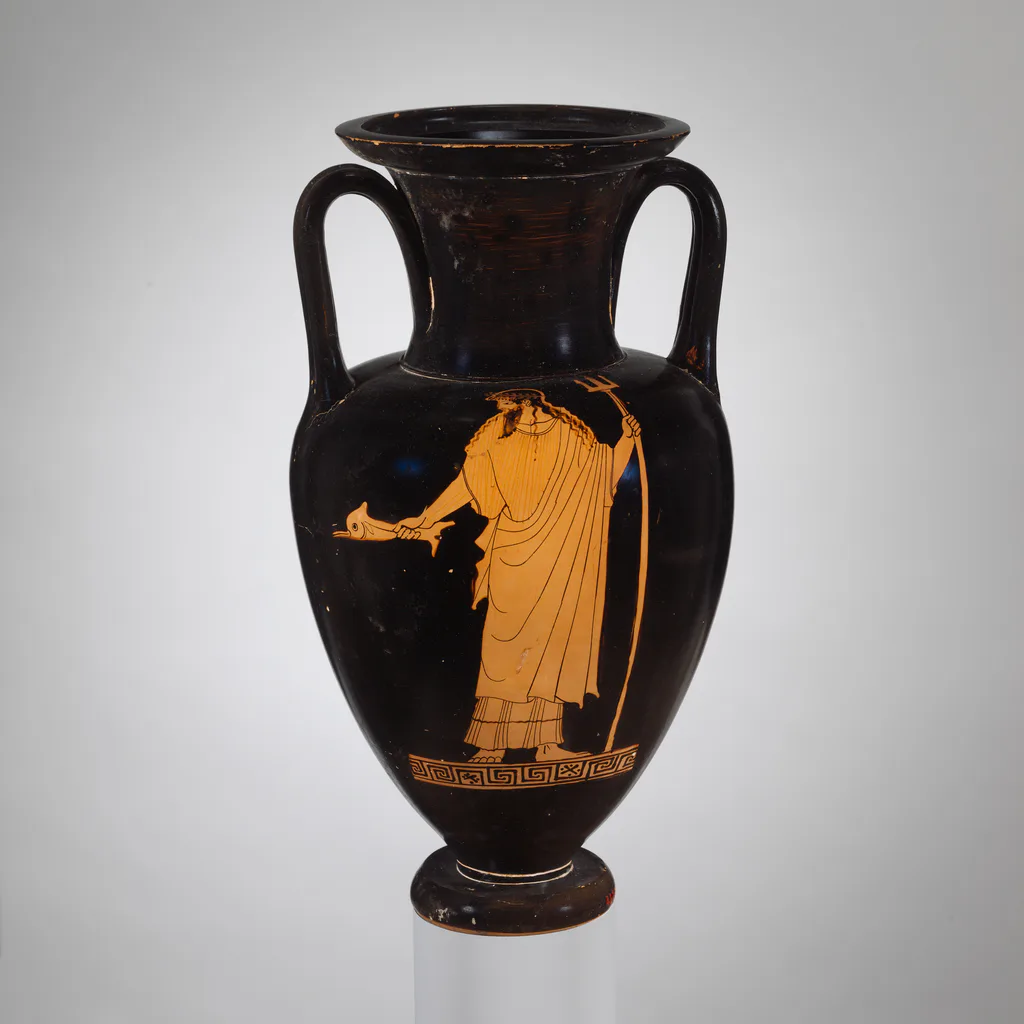
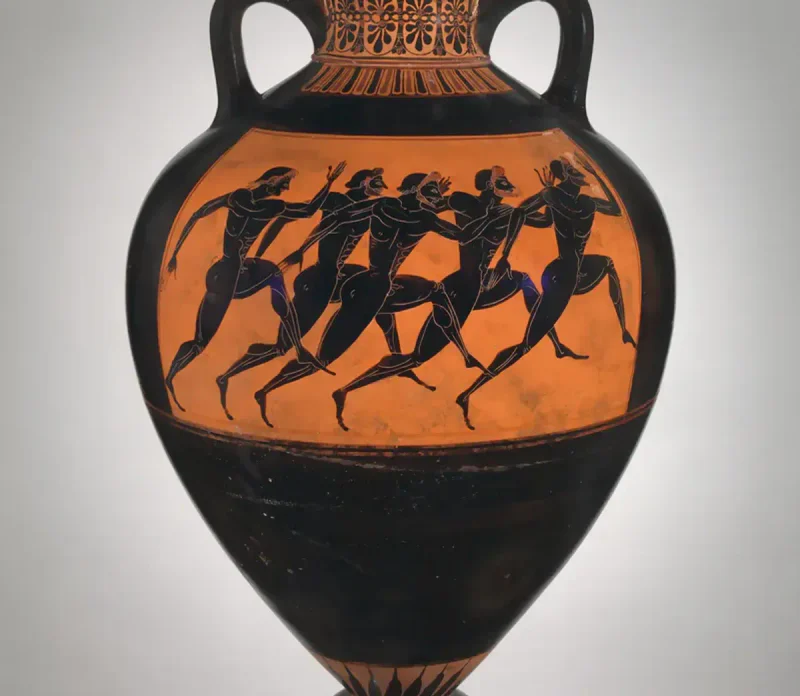
Look at how this vase is painted. What is this style called?
- Black-figure
- Red-figure
Answer: Red-figure
- 21
What is the last letter of the Greek alphabet?
- Alpha
- Delta
- Omega
- Zeta
Answer: Omega
- 22
Bonus: The marathon race is named after a place in Greece. How long is a marathon today?
- About 10 km
- About 100 km
- About 42 km
- About 5 km
Answer: About 42 km