The questions
- 1
About when were the Middle Ages in Europe?
- From about 1800 to 1900
- From about 3000 to 1000 BC
- From about AD 100 to 300
- From about AD 500 to 1500
Answer: From about AD 500 to 1500
- 2
Who worked the land and gave part of their harvest to the lord?
- Knights
- Merchants
- Monks
- Peasants
Answer: Peasants
- 3
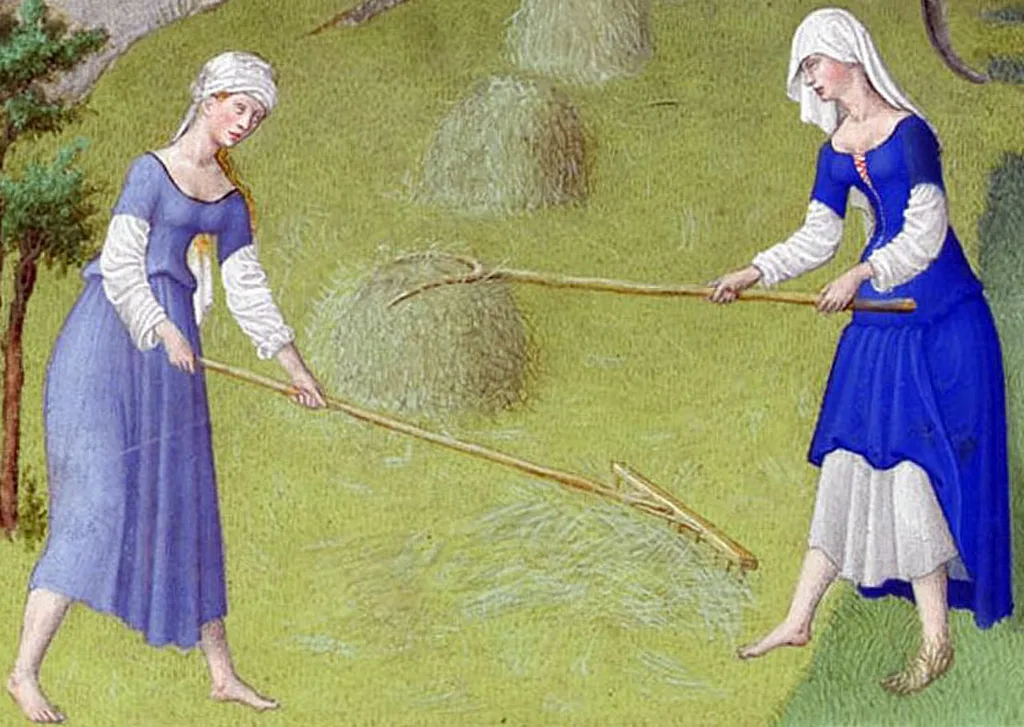
Look at this picture, painted in the 1400s. What are these women doing?
- Building a castle
- Dancing at a wedding
- Fighting a battle
- Gathering hay
Answer: Gathering hay
- 4
In the early Middle Ages, who copied most books by hand?
- Kings
- Knights
- Monks
- Peasants
Answer: Monks
- 5
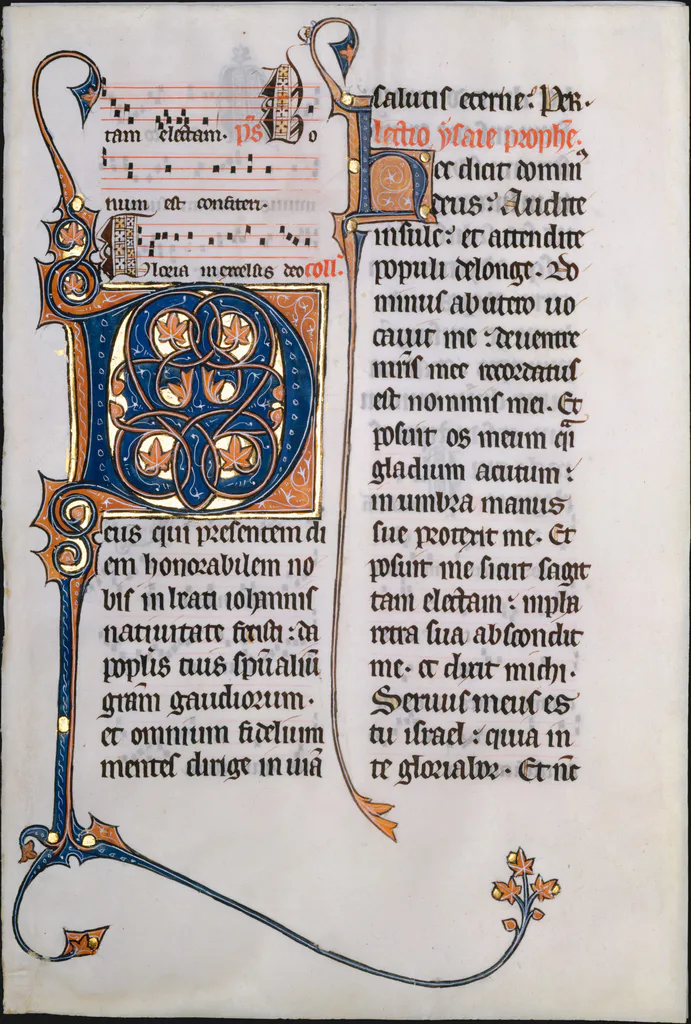
Long ago, every page of a book like this was copied out by hand with a pen. What do we call a book like this?
- A magazine
- A manuscript
- A newspaper
- A paperback
Answer: A manuscript
- 6
Many medieval books were written on parchment. What was it made from?
- Animal skin
- Cotton cloth
- Palm leaves
- Tree bark
Answer: Animal skin
- 7
Why are many medieval books called "illuminated"?
- They are decorated with gold and bright colours
- They glow softly in the dark
- They were made by lamp makers in towns
- They were read by the light of candles
Answer: They are decorated with gold and bright colours
- 8
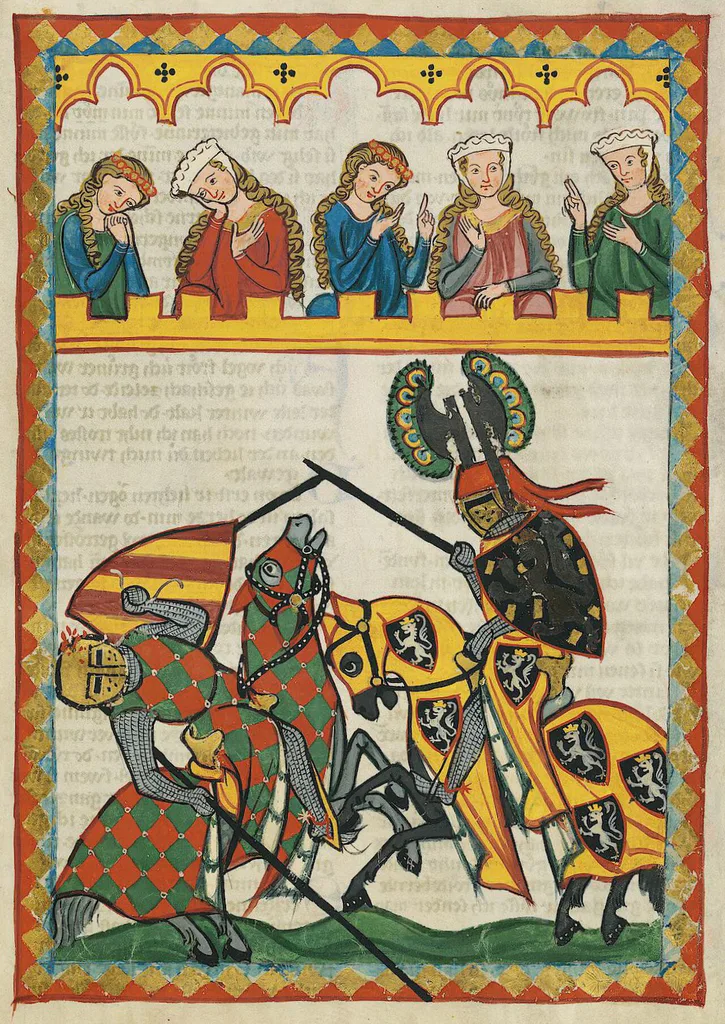
What is happening in this medieval picture?
- A harvest
- A joust
- A market
- A wedding
Answer: A joust
- 9
In medieval towns, bakers, weavers, and other craftspeople joined groups that set prices and trained young workers. What were these groups called?
- Guilds
- Manors
- Monasteries
- Tournaments
Answer: Guilds
- 10
What was a young person called who lived with a master to learn a trade?
- A jester
- A peasant
- A pilgrim
- An apprentice
Answer: An apprentice
- 11
Many English surnames come from medieval jobs. What did a fletcher make?
- Arrows
- Barrels
- Bread
- Shoes
Answer: Arrows
- 12
In the 1340s, the Black Death spread across Europe. What was it?
- A great storm at sea
- A huge army of soldiers
- A long war between kings
- A terrible disease
Answer: A terrible disease
- 13
Medieval Europeans had no potatoes or tomatoes. Why not?
- Kings had banned them
- Nobody liked the taste
- Only the Americas had them
- They were far too expensive
Answer: Only the Americas had them
- 14
At a medieval feast, a thick slice of stale bread was often used as a ___.
- Cup
- Napkin
- Plate
- Spoon
Answer: Plate
- 15
True or false: Most educated people in the Middle Ages thought the Earth was flat.
- False: they knew the Earth was round
- True: they were afraid of sailing off the edge
Answer: False: they knew the Earth was round
- 16
True or false: Many medieval towns had public bathhouses.
- False: nobody washed in the Middle Ages
- True: people went there to wash and relax
Answer: True: people went there to wash and relax
- 17
What did a medieval miller do?
- Baked bread in an oven
- Ground grain into flour
- Hammered iron into swords
- Wove cloth on a loom
Answer: Ground grain into flour
- 18
We call our numbers 0 to 9 "Arabic numerals", and they reached Europe in the Middle Ages. Where were they first developed?
- Arabia
- Greece
- India
- Rome
Answer: India
- 19
In 1215, English barons made King John agree to a document that limited his power. What is it called?
- Magna Carta
- The Bayeux Tapestry
- The Bill of Rights
- The Domesday Book
Answer: Magna Carta
- 20
Which invention, around 1450, meant books no longer had to be copied by hand?
- The fountain pen
- The paper mill
- The printing press
- The typewriter
Answer: The printing press