The questions
- 1
The Industrial Revolution began in Britain in the 1700s. What does the word "industry" mean?
- Growing food on farms
- Making goods in factories
- Selling things in shops
- Teaching children in schools
Answer: Making goods in factories
- 2
Before there were factories, where was most cloth made?
- At home
- In castles
- In churches
- On ships
Answer: At home
- 3
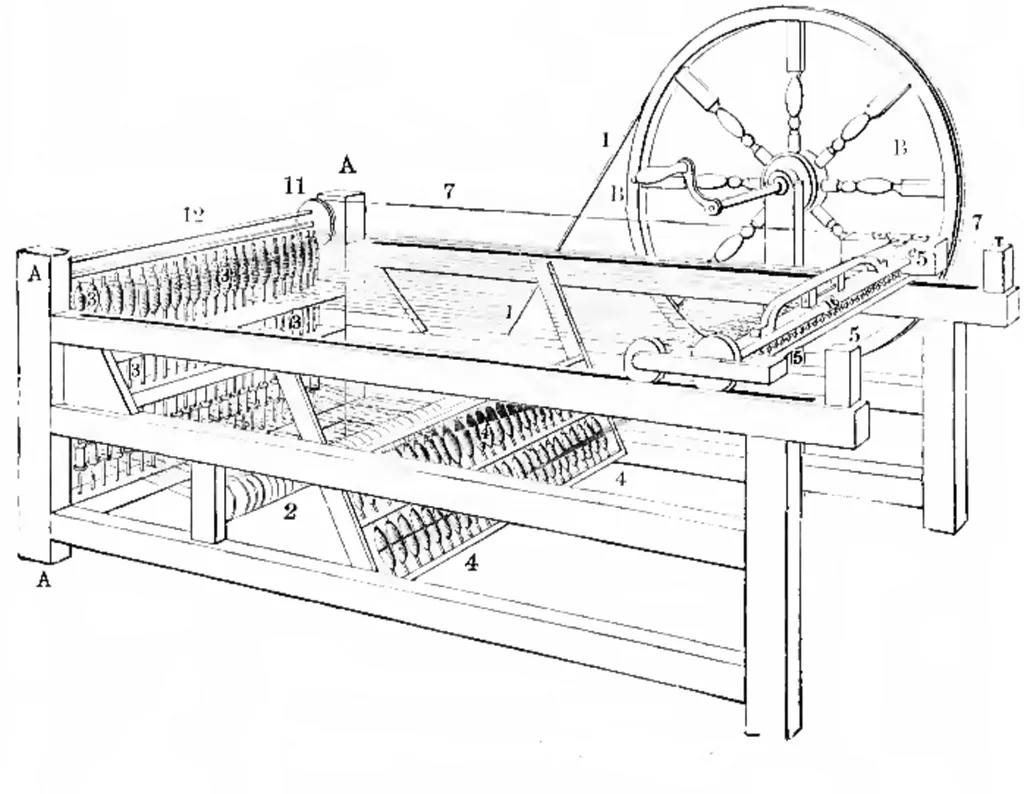
The first machine like this one was built in about 1764. It made many threads at once instead of one. What is it called?
- A flying shuttle
- A spinning jenny
- A steam hammer
- A threshing machine
Answer: A spinning jenny
- 4
The first mills had machines driven by water wheels. Where were the mills built?
- In the middle of towns
- Near the sea
- Next to fast rivers
- On top of hills
Answer: Next to fast rivers
- 5
Thomas Newcomen's steam engines, from 1712 on, had one main job. What was it?
- Driving big ships
- Pulling trains along rails
- Pumping water out of mines
- Spinning thread
Answer: Pumping water out of mines
- 6
James Watt did not invent the steam engine. What did he do?
- He built the very first one
- He drove the first steam car
- He gave it its name
- He made it use far less coal
Answer: He made it use far less coal
- 7
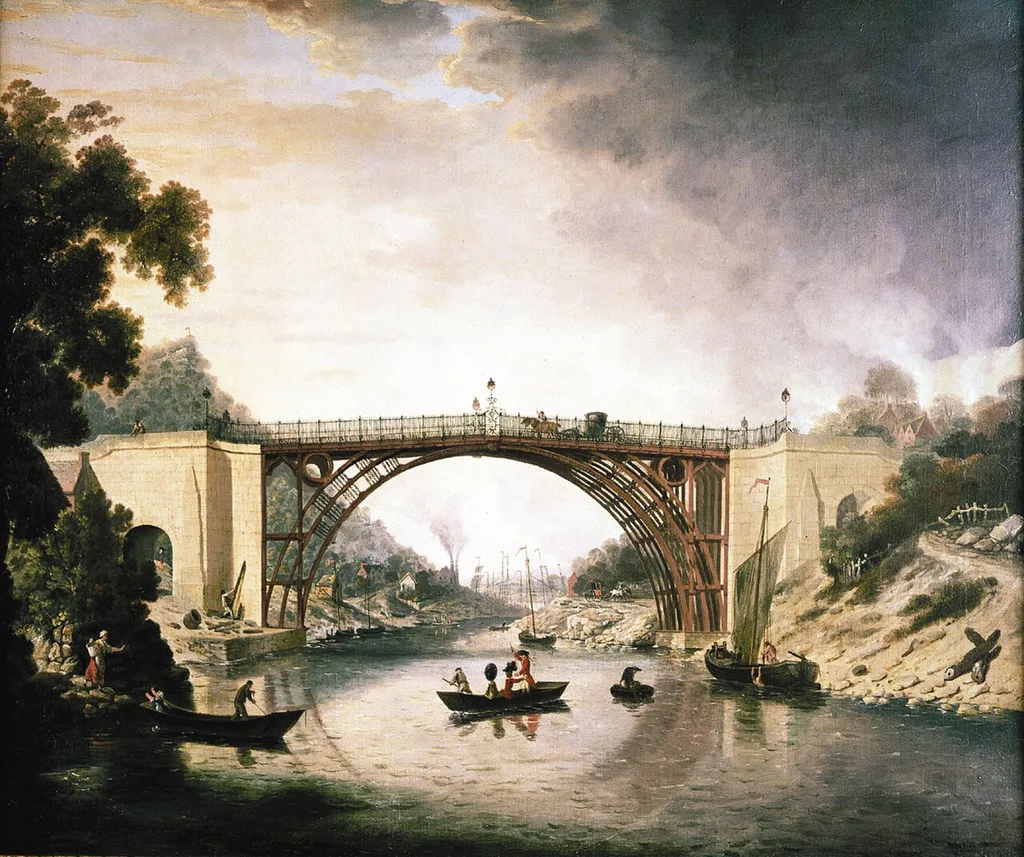
This bridge across the River Severn was put up in 1779. It was the world's first big arch bridge made of what?
- Concrete
- Glass
- Iron
- Steel
Answer: Iron
- 8
In the 1700s, workers dug hundreds of kilometres of new waterways to carry coal and goods by boat. What are they called?
- Canals
- Dams
- Moats
- Wells
Answer: Canals
- 9
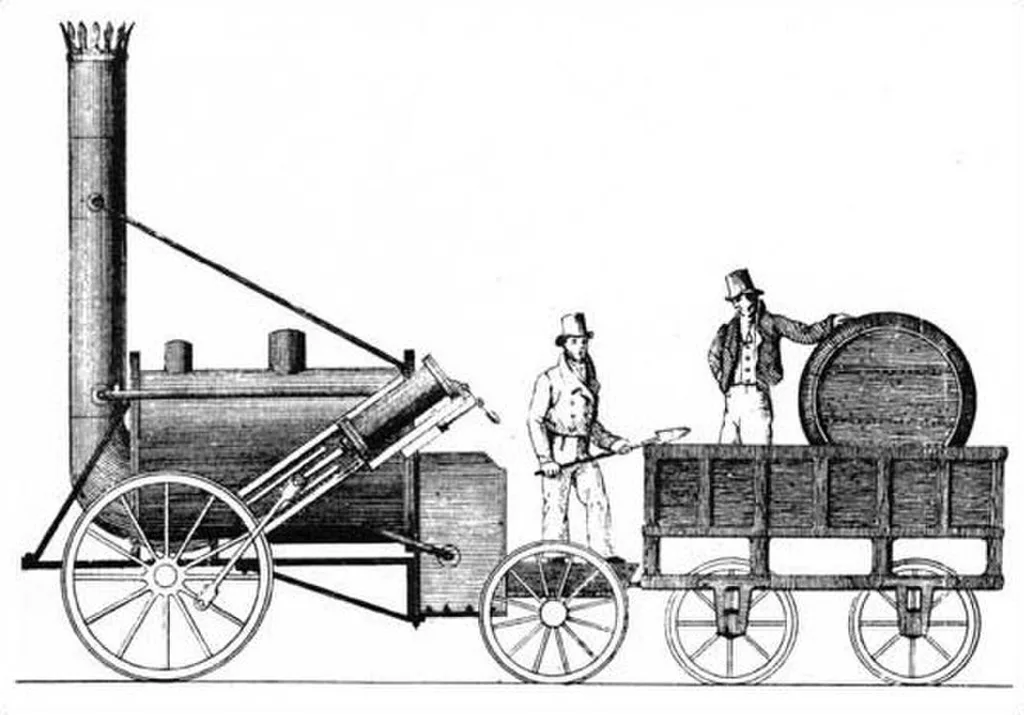
In 1829, this locomotive by George and Robert Stephenson won a contest to pull trains on a new railway. What was it called?
- The Novelty
- The Perseverance
- The Rocket
- The Sans Pareil
Answer: The Rocket
- 10
Why did many families move from farms to towns like Manchester?
- To find work in factories
- To get away from the factories
- To live beside the sea
- To study at a university
Answer: To find work in factories
- 11
Manchester had so many mills making cloth that it got a nickname. What was it?
- Coalopolis
- Cottonopolis
- Steamopolis
- Woolopolis
Answer: Cottonopolis
- 12
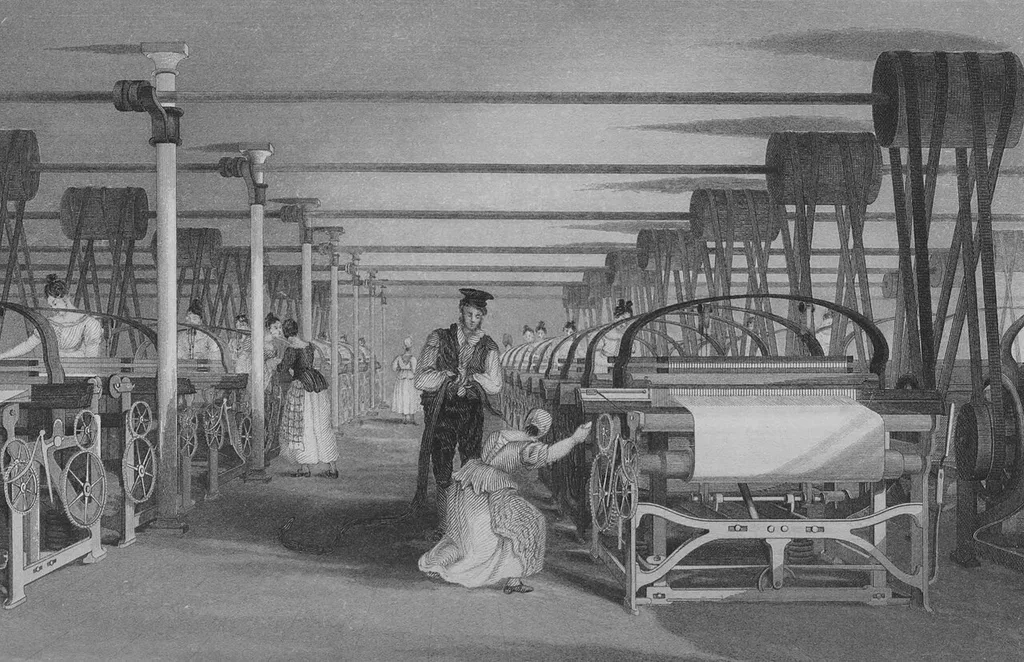
In this picture from 1835, women work at rows of machines that weave cloth. What are the machines called?
- Power looms
- Printing presses
- Sewing machines
- Spinning wheels
Answer: Power looms
- 13
Children worked long hours in early mills. In 1833, a new British law banned children under what age from working in most textile mills?
Answer: 9
- 14
The Luddites were workers who broke new machines in factories. Why?
- The machines were too slow
- Their bosses told them to
- They feared for their jobs
- They wanted the metal parts
Answer: They feared for their jobs
- 15
True or false: smoke from coal fires turned many city buildings black.
- False: coal smoke leaves no dirt
- True: the soot stuck to the walls
Answer: True: the soot stuck to the walls
- 16
In 1851, a huge glass building in London showed off new machines from around the world. What was it called?
- The Crystal Palace
- The Glass Tower
- The Silver Castle
- The Steam Hall
Answer: The Crystal Palace
- 17
In Britain before the railways, towns set their clocks by the Sun, so each town's time was a little different. What did the railways bring?
- A clock in every home
- Longer days in the winter months
- One time for the whole country
- Shorter hours for factory workers
Answer: One time for the whole country
- 18
Bonus: in 1804, Richard Trevithick built the first steam engine to pull a train on rails. In which country of the UK did it run?
- England
- Northern Ireland
- Scotland
- Wales
Answer: Wales