The questions
- 1
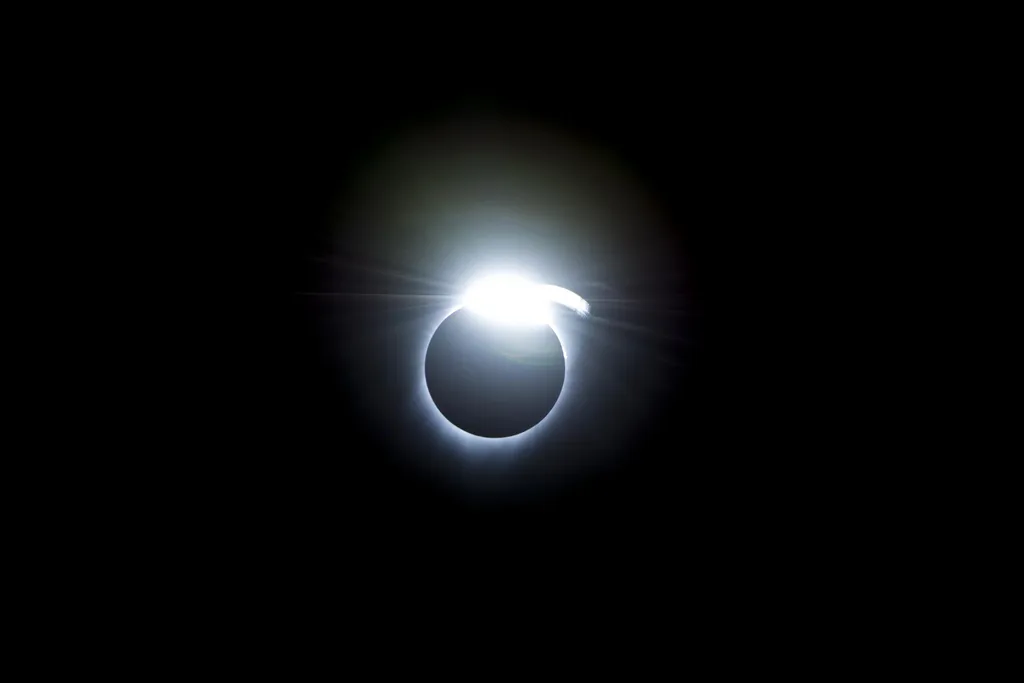
Just before the Moon covers the whole Sun, one last bright point of sunlight shines at its edge. It looks like a piece of jewellery. What do people call it?
Answer: The diamond ring
- 2
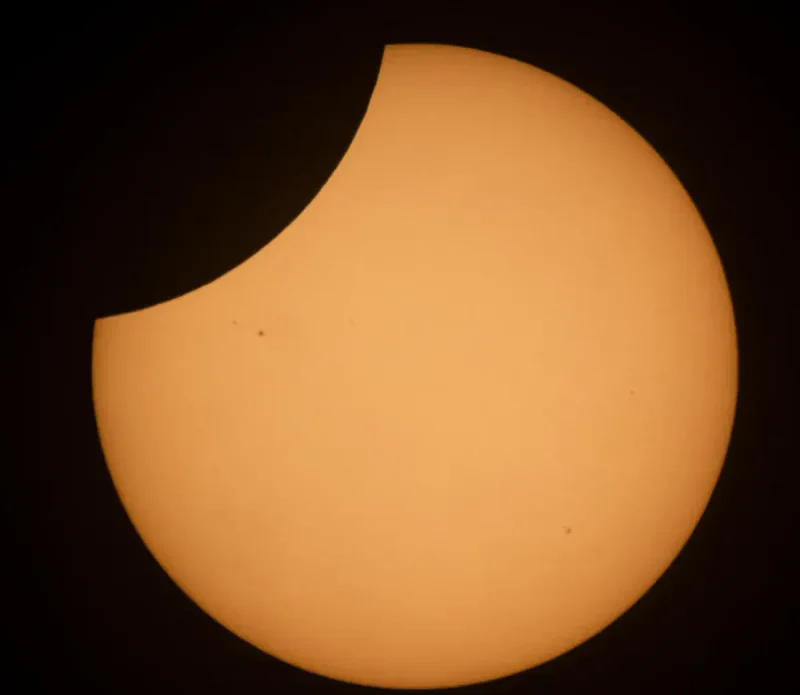
You have no eclipse glasses. How can you watch a partial solar eclipse safely?
- Look through a telescope with no filter
- Look through plain binoculars
- Make a pinhole viewer
- Wear dark sunglasses
Answer: Make a pinhole viewer
- 3
Is it safe to look at a lunar eclipse without eclipse glasses?
- No: it can hurt your eyes at once
- Yes: moonlight cannot hurt your eyes
Answer: Yes: moonlight cannot hurt your eyes
- 4
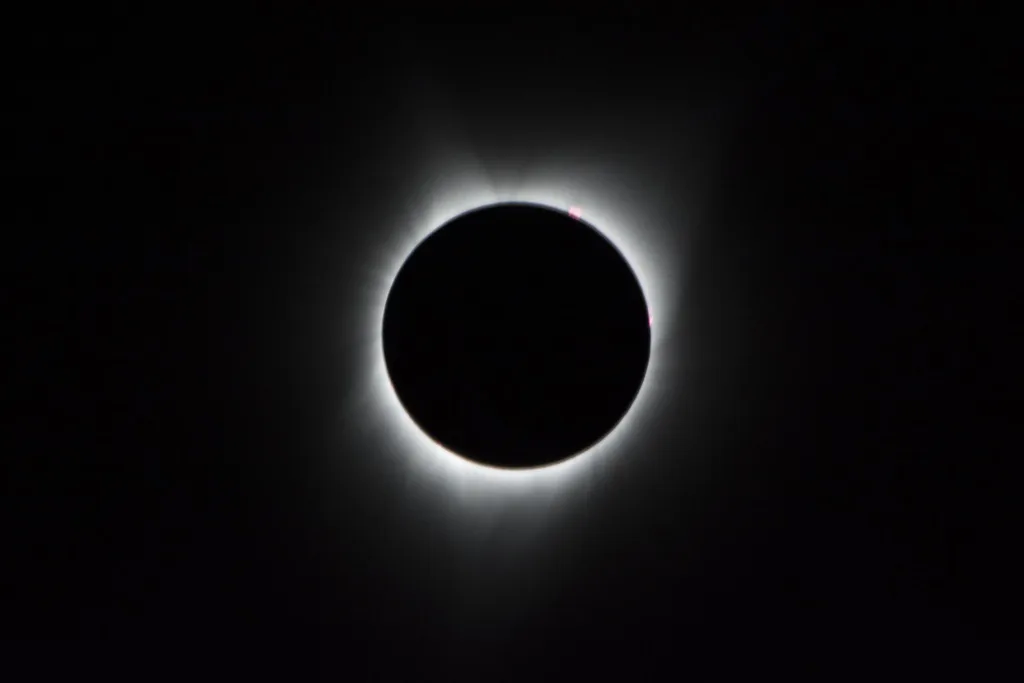
During a total solar eclipse, this white glow appears around the dark Moon. What is it?
- Clouds lit up from behind
- Light from distant stars
- Sunlight bouncing off the Moon
- The Sun's outer atmosphere
Answer: The Sun's outer atmosphere
- 5
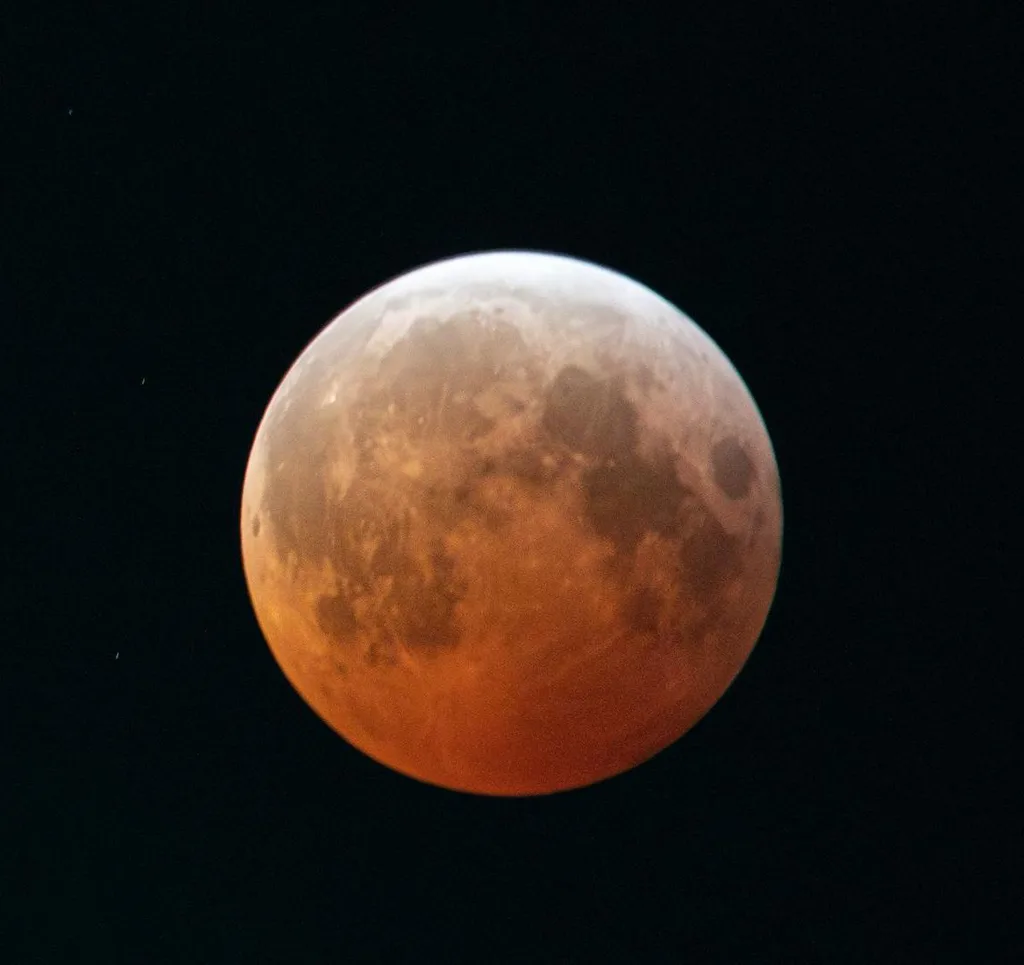
During a total lunar eclipse, the Moon often turns red, like this. Why?
- Red dust storms blow across the whole Moon
- The Earth's air lets red sunlight reach it
- The Moon's rocks heat up and glow red
- The Sun itself turns red for an hour
Answer: The Earth's air lets red sunlight reach it
- 6
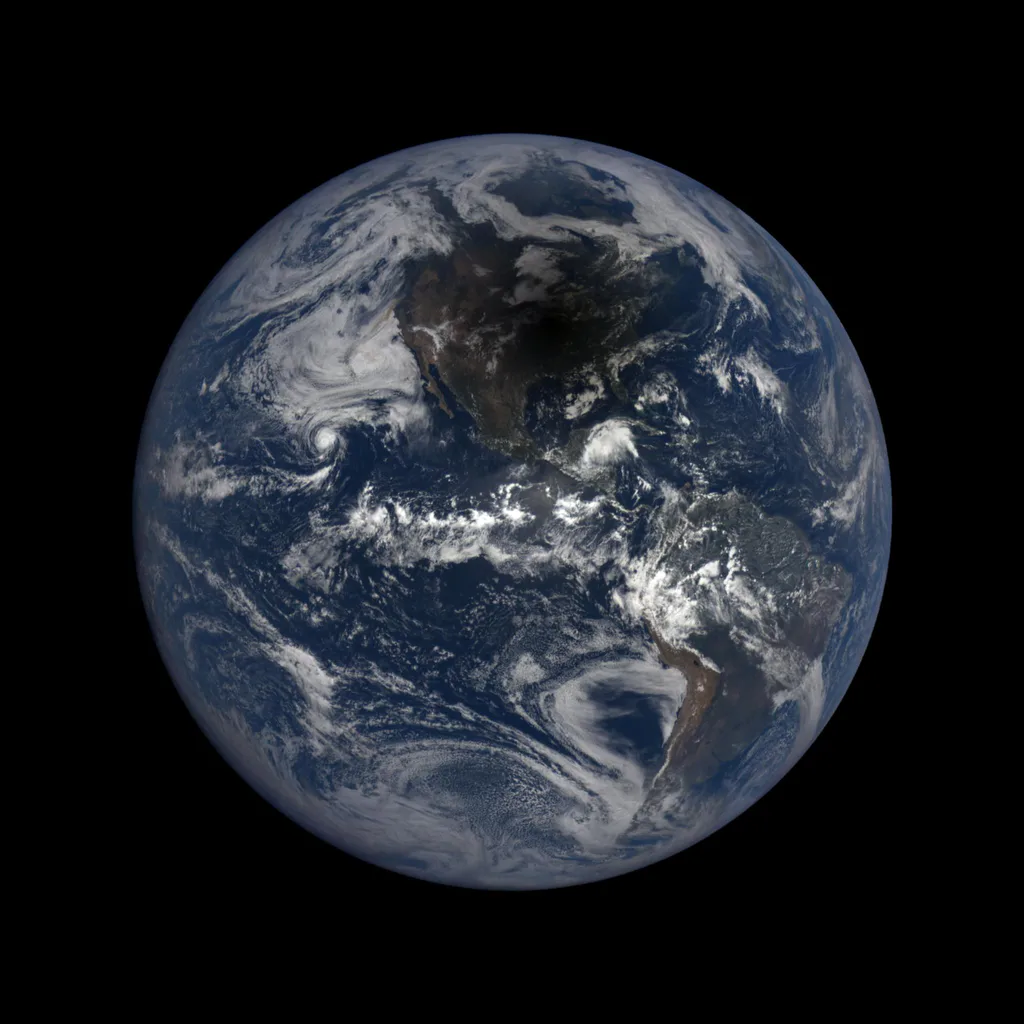
A NASA camera far out in space took this photo of the Earth during a solar eclipse. What is the dark patch?
- A huge storm cloud
- Smoke from forest fires
- The Moon's shadow
- The start of the night
Answer: The Moon's shadow
- 7
During the totality of a solar eclipse, does the air usually get cooler or warmer?
- Cooler
- Warmer
Answer: Cooler
- 8
True or false: during the totality of a solar eclipse you can sometimes see bright stars and planets in the daytime sky.
- False: stars only appear at night
- True: the sky gets dark enough
Answer: True: the sky gets dark enough
- 9
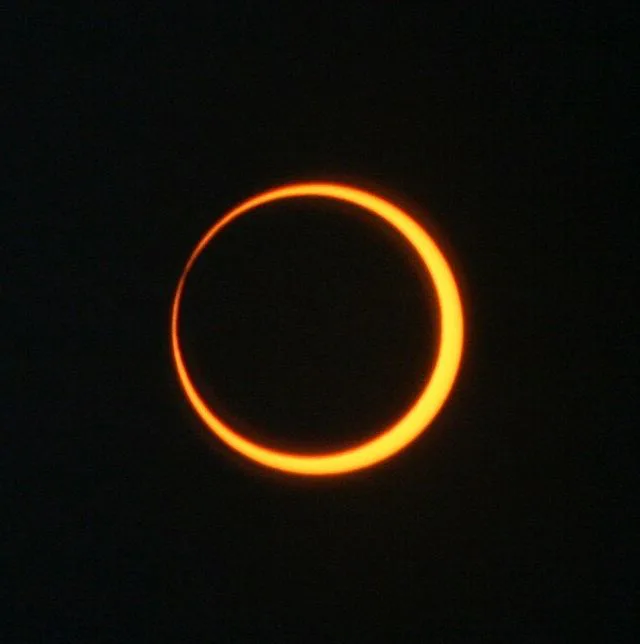
Here the Moon was a little too far from the Earth to cover the whole Sun, so a thin bright circle of the Sun was left. What is this kind of eclipse called?
- A lunar eclipse
- A supermoon
- A total solar eclipse
- An annular eclipse
Answer: An annular eclipse
- 10
On 2 August 2027, a total solar eclipse will cross southern Spain, North Africa and Egypt. Near Luxor, in Egypt, about how long will the Moon cover the whole Sun?
- Just over 1 hour
- Just over 1 minute
- Just over 6 minutes
- Just over 6 seconds
Answer: Just over 6 minutes
- 11
Which usually lasts longer: totality in a solar eclipse or totality in a lunar eclipse?
- In a lunar eclipse
- In a solar eclipse
Answer: In a lunar eclipse
- 12
On average, how often does a total solar eclipse happen at the same place on the Earth?
- Once every few hundred years
- Once every few million years
- Once every few thousand years
- Once every few years
Answer: Once every few hundred years
- 13
The Sun is about 400 times wider than the Moon, but they look about the same size in our sky. Why?
- It is about 400 times brighter
- It is about 400 times farther away
- It is about 400 times hotter
- It is about 400 times older than the Moon
Answer: It is about 400 times farther away
- 14
The Moon goes round the Earth about once a month. Why isn't there a solar eclipse every month?
- The Moon is too far away most months
- The Moon moves too fast most months
- The Moon's path is tilted a little
- The Sun is too bright most months
Answer: The Moon's path is tilted a little
- 15
Bonus: the Moon is moving away from the Earth by about 4 cm every year. True or false: far in the future, there will be no more total solar eclipses.
- False: the Moon will always cover the Sun exactly
- True: the Moon will look too small to cover the Sun
Answer: True: the Moon will look too small to cover the Sun