The questions
- 1
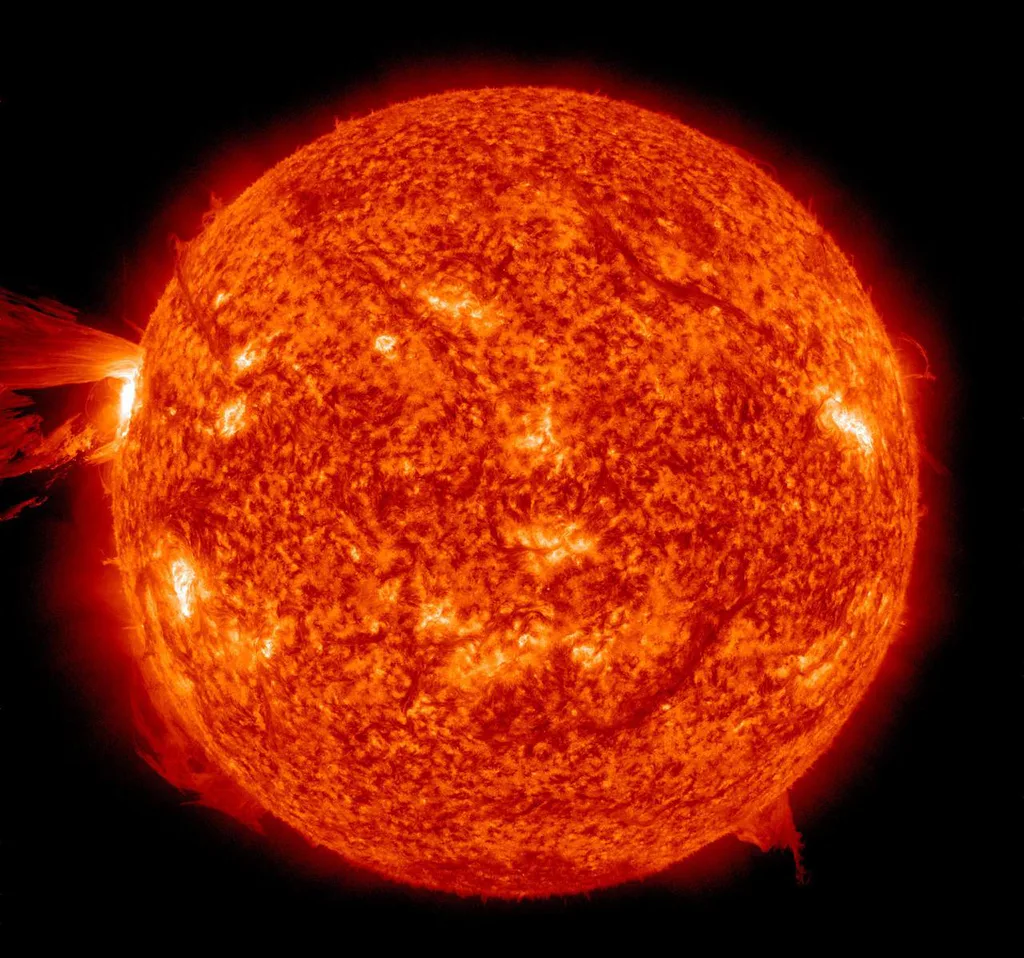
This is the Sun, photographed by a NASA spacecraft. It is a giant ball of very hot ___.
- Gas
- Lava
- Metal
- Rock
Answer: Gas
- 2
True or false: it is safe to look at the Sun through binoculars for just one second.
- False: even a second can hurt your eyes
- True: a second is too short to hurt your eyes
Answer: False: even a second can hurt your eyes
- 3
About how far away is the Sun from the Earth?
- About 150 billion km
- About 150 km
- About 150 million km
- About 150 thousand km
Answer: About 150 million km
- 4
Why does the Sun look so much bigger and brighter than the other stars?
- It is much closer to us
- It is the biggest star there is
- It is the hottest star there is
- It is the only star that shines
Answer: It is much closer to us
- 5
In the far north of Norway, the Sun stays in the sky all night for weeks. In which season does this happen?
- Summer
- Winter
Answer: Summer
- 6
There are stars in the sky in the daytime too. Why can't we see them?
- Clouds always cover them
- The sunlight is too bright
- They move far away in the day
- They switch off until night
Answer: The sunlight is too bright
- 7
What keeps the Earth and the other planets going round the Sun?
- The Sun's gravity
- The Sun's heat
- The Sun's light
- The Sun's magnetism
Answer: The Sun's gravity
- 8
Sunlight on your skin helps your body make one vitamin. Which one?
- Vitamin A
- Vitamin B
- Vitamin C
- Vitamin D
Answer: Vitamin D
- 9
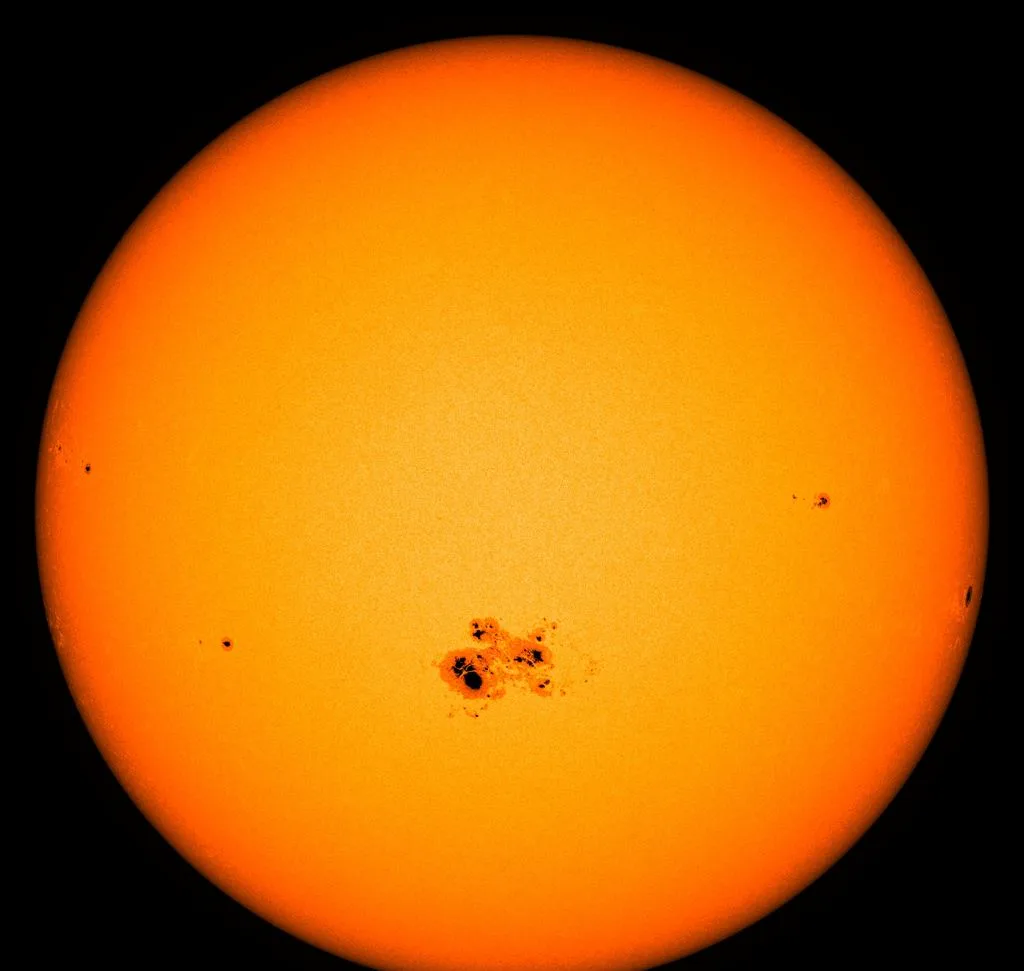
These dark patches on the Sun are called sunspots. Why do they look dark?
- They are big pieces of dark rock
- They are clouds of thick black smoke
- They are cooler than the rest of the Sun
- They are holes that go right through the Sun
Answer: They are cooler than the rest of the Sun
- 10
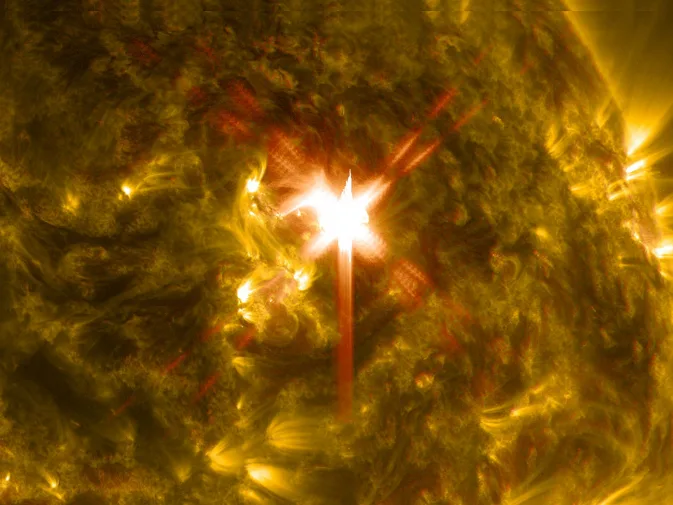
This bright flash is a solar flare. What can big flares disturb on and around the Earth?
- Radio signals and satellites
- The length of the day
- The tides of the oceans
- The way plants grow
Answer: Radio signals and satellites
- 11
Sunspots move slowly across the Sun from one day to the next. What does this show?
- The Sun is cooling down
- The Sun is moving away
- The Sun is shrinking
- The Sun is spinning
Answer: The Sun is spinning
- 12
The number of sunspots goes up and down in a cycle. About how many years does one cycle last?
Answer: 11
- 13
True or false: the Sun shines because it is burning, like a giant campfire.
- False: atoms join together in its centre
- True: it burns like a huge campfire
Answer: False: atoms join together in its centre
- 14
About how many Earths could fit inside the Sun?
- About 1,300
- About 1.3 billion
- About 1.3 million
- About 13
Answer: About 1.3 million
- 15
The Sun is about halfway through its life. About how long will it be until it uses up the hydrogen in its centre?
- About 5 billion years
- About 5 million years
- About 5 thousand years
- About 5 years
Answer: About 5 billion years
- 16
True or false: the Earth is closest to the Sun in January.
- False: it is closest in July
- True: it is closest in early January
Answer: True: it is closest in early January
- 17
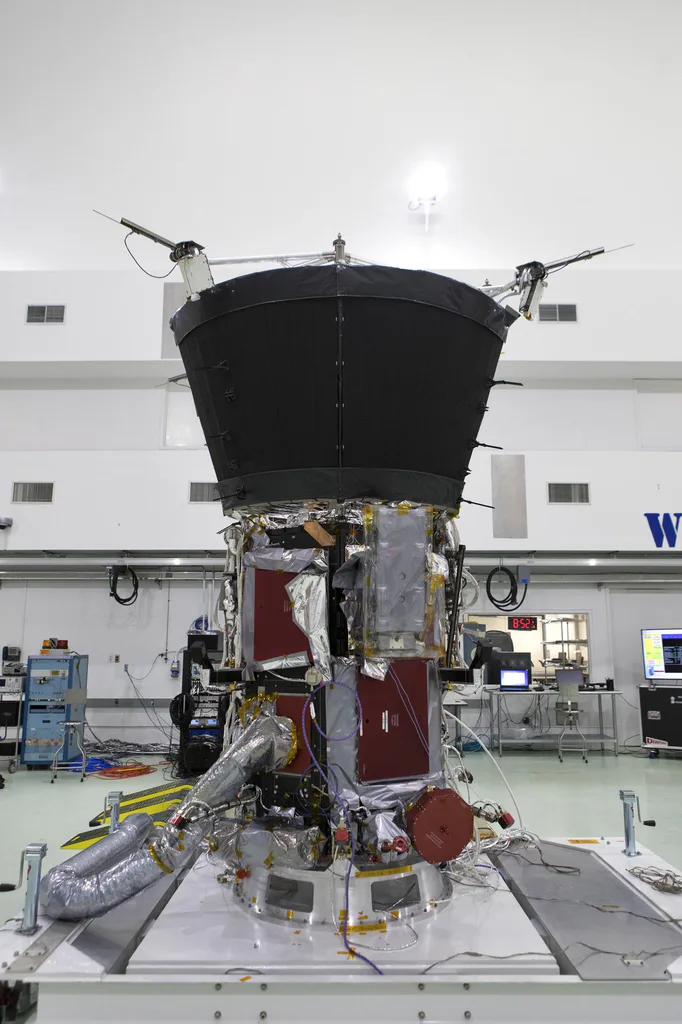
Bonus: in December 2024, NASA's Parker Solar Probe flew closer to the Sun than anything people have ever made. About how close did it get to the Sun's surface?
- About 6 million km
- About 6,000 km
- About 60 million km
- About 600,000 km
Answer: About 6 million km