The questions
- 1
Day of the Dead (Día de los Muertos) is a famous celebration from which country?
- Argentina
- Brazil
- Mexico
- Spain
Answer: Mexico
- 2
On which days is Day of the Dead mainly celebrated?
- 1 and 2 January
- 1 and 2 November
- 14 and 15 February
- 24 and 25 December
Answer: 1 and 2 November
- 3
True or false: Day of the Dead is just Halloween with a Spanish name.
- False: it has its own story and customs
- True: it is the same holiday as Halloween
Answer: False: it has its own story and customs
- 4
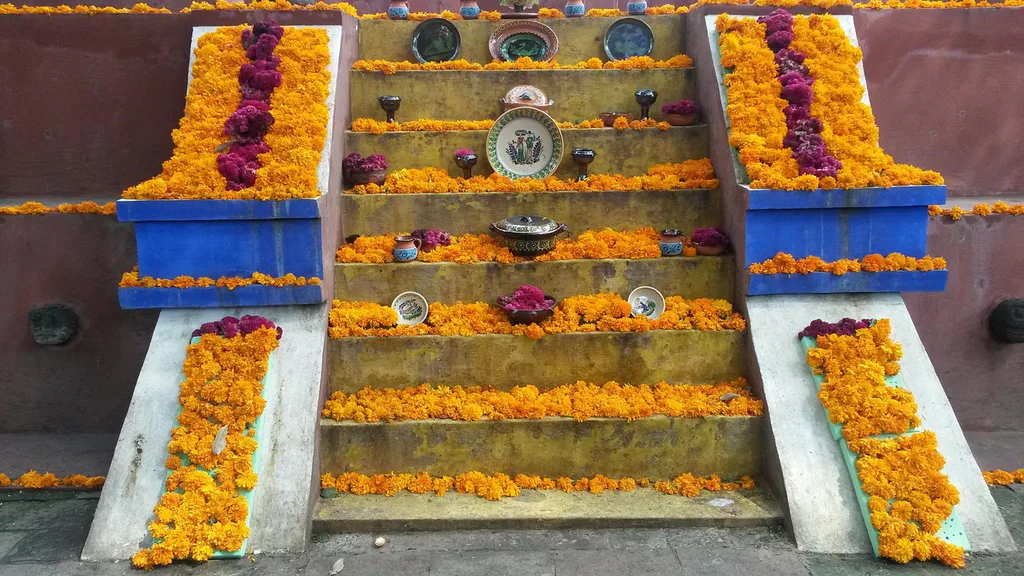
Families build this for Day of the Dead and fill it with flowers, candles, food, and photos of loved ones. What is it called in Spanish?
- A fiesta
- A mercado
- A piñata
- An ofrenda
Answer: An ofrenda
- 5
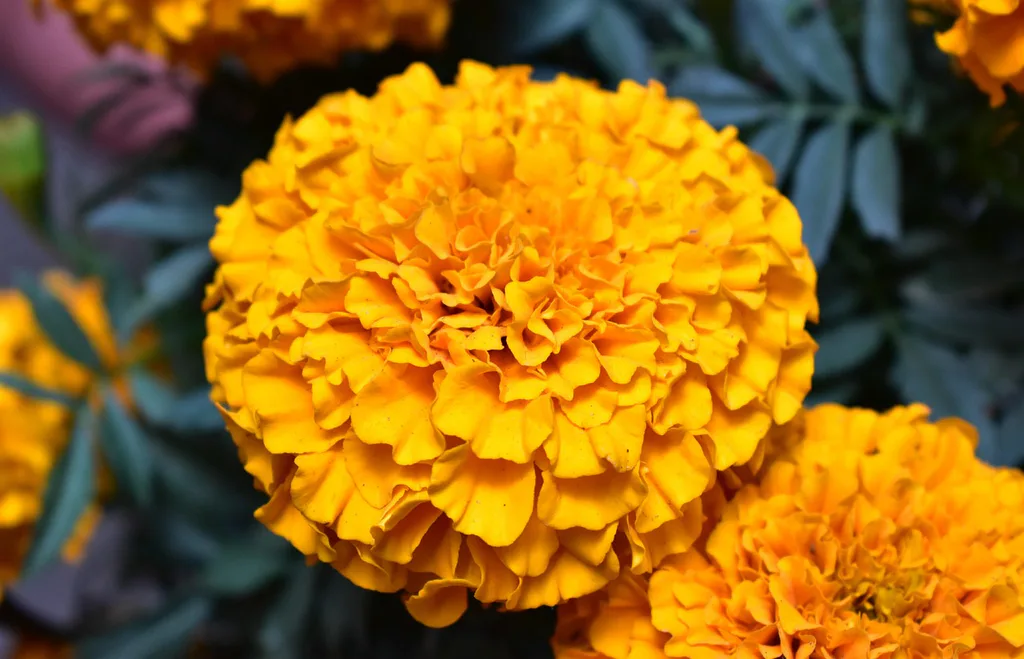
These bright orange flowers fill homes and markets for Day of the Dead. What are they?
- Marigolds
- Roses
- Sunflowers
- Tulips
Answer: Marigolds
- 6
The festival's orange flowers are also called cempasúchil, a word from Nahuatl. This language is still spoken today. Long ago, it was the language of which people?
- The Aztecs
- The Inca
- The Inuit
- The Maya
Answer: The Aztecs
- 7
Families make paths of orange petals from the street to their altar. What are the paths for?
- To guide the spirits home
- To keep the floor clean
- To keep the spirits away
- To welcome the neighbours
Answer: To guide the spirits home
- 8
True or false: many families put a glass of water on their altar for the spirits.
- False: there is never water on the altar
- True: they are thirsty after a long journey
Answer: True: they are thirsty after a long journey
- 9
What does the Spanish word "calavera" mean?
- Candle
- Flower
- Ghost
- Skull
Answer: Skull
- 10
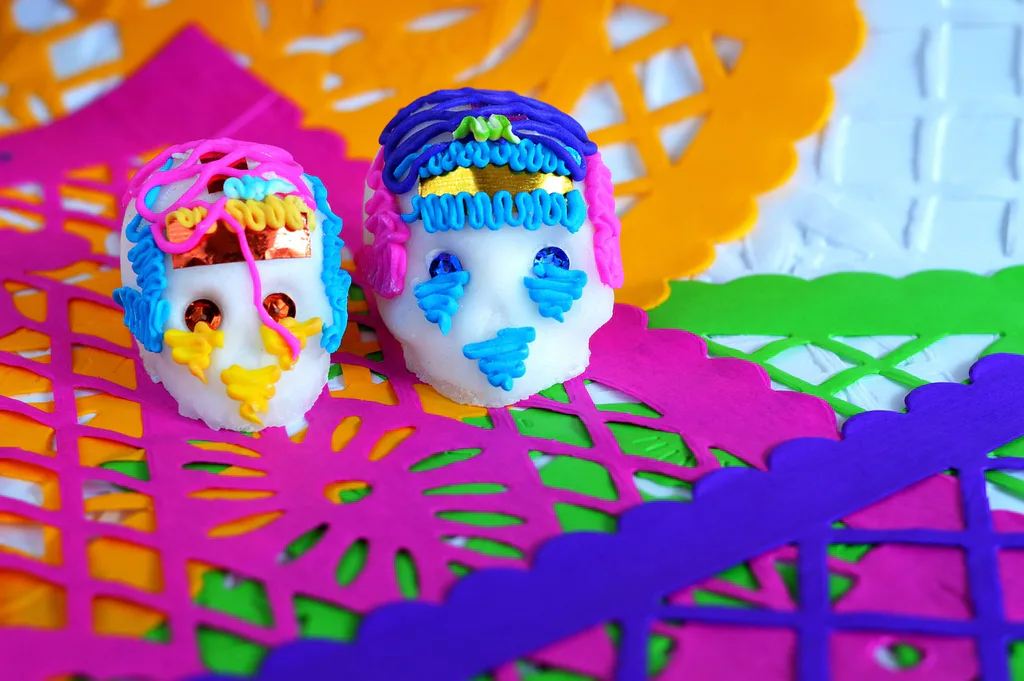
Look at these! They are sold at markets for Day of the Dead. What are they usually made of?
- Glass
- Stone
- Sugar
- Wood
Answer: Sugar
- 11
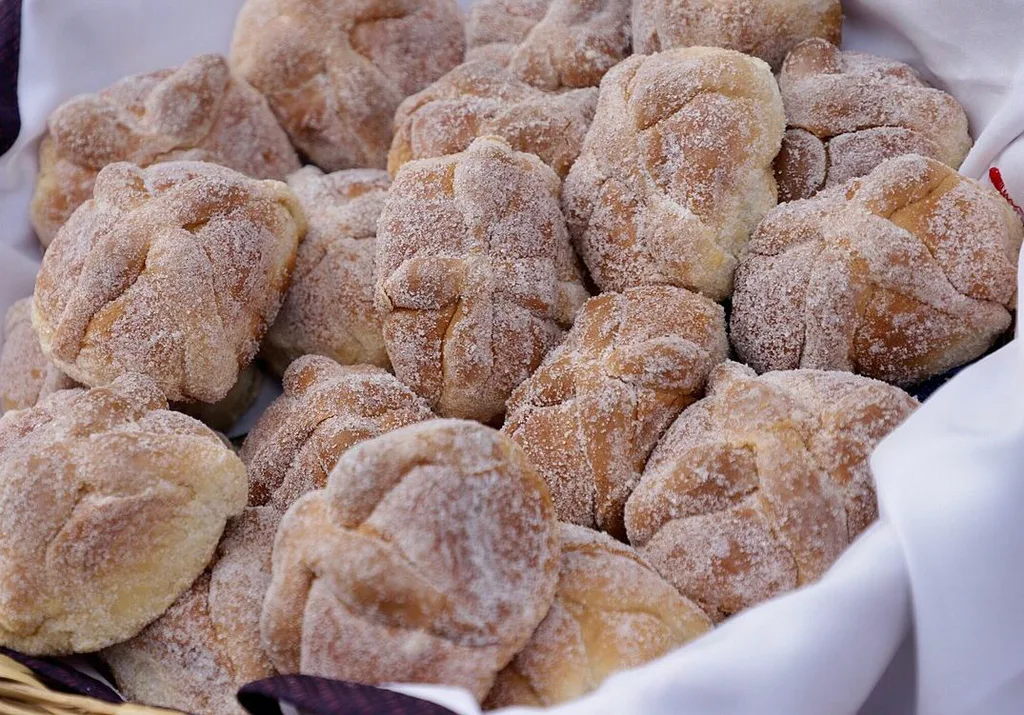
This sweet bread is baked for Day of the Dead, with shapes like little bones on top. What is it called in Spanish?
Answer: Pan de muerto
- 12
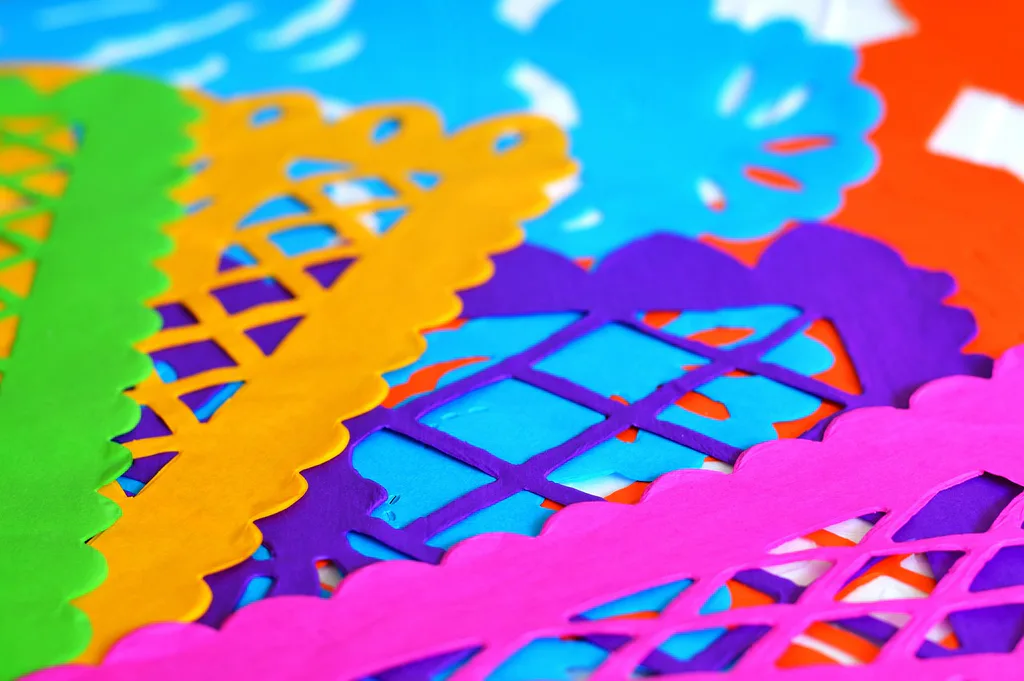
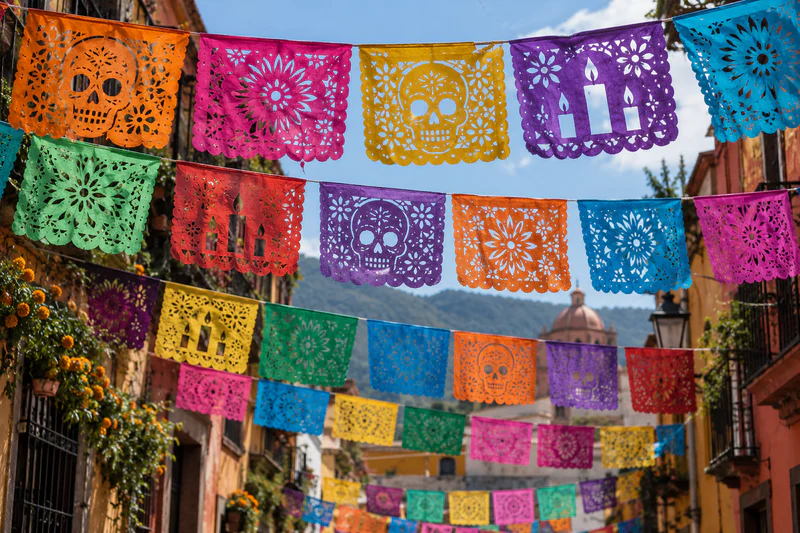
These colourful cut-out decorations are hung in long strings for Day of the Dead. What are they called?
- Confetti
- Origami
- Papel picado
- Paper snowflakes
Answer: Papel picado
- 13
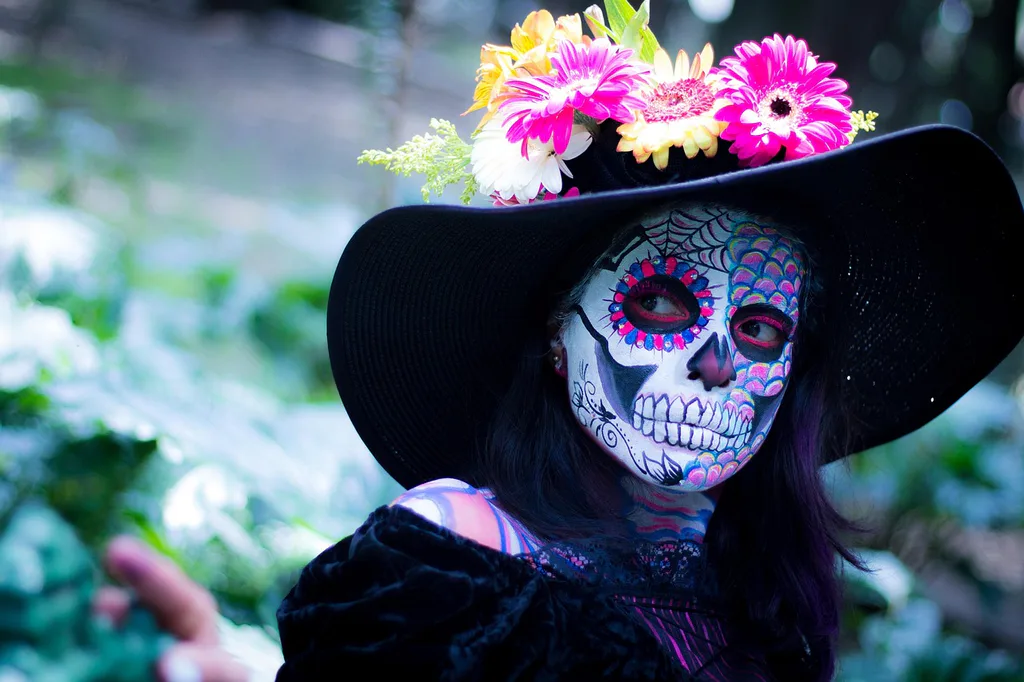
This elegant skeleton lady in a big hat is a famous Day of the Dead figure. What is her name?
- La Bamba
- La Catrina
- La Cucaracha
- La Paloma
Answer: La Catrina
- 14
Many families spend part of the festival at the cemetery. What do they do there?
- Carve faces on pumpkins
- Clean and decorate the graves
- Dress up as ghosts
- Plant a tree for each person
Answer: Clean and decorate the graves
- 15
For Day of the Dead, the town of Sumpango in Guatemala remembers loved ones with giant, colourful ___.
- balloons
- boats
- kites
- lanterns
Answer: kites
- 16
Day of the Dead mixes old Indigenous traditions with ___ traditions brought from Spain.
- Buddhist
- Catholic
- Hindu
- Viking
Answer: Catholic