The questions
- 1
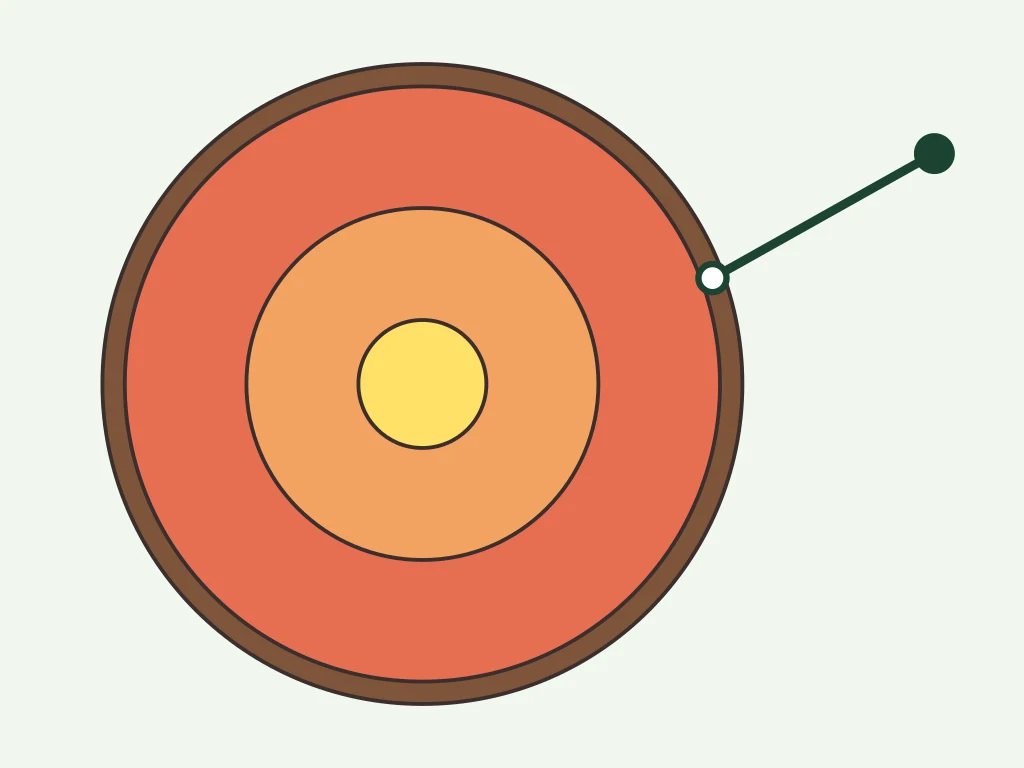
Which layer is the arrow pointing to? We live on it.
- The crust
- The inner core
- The mantle
- The outer core
Answer: The crust
- 2
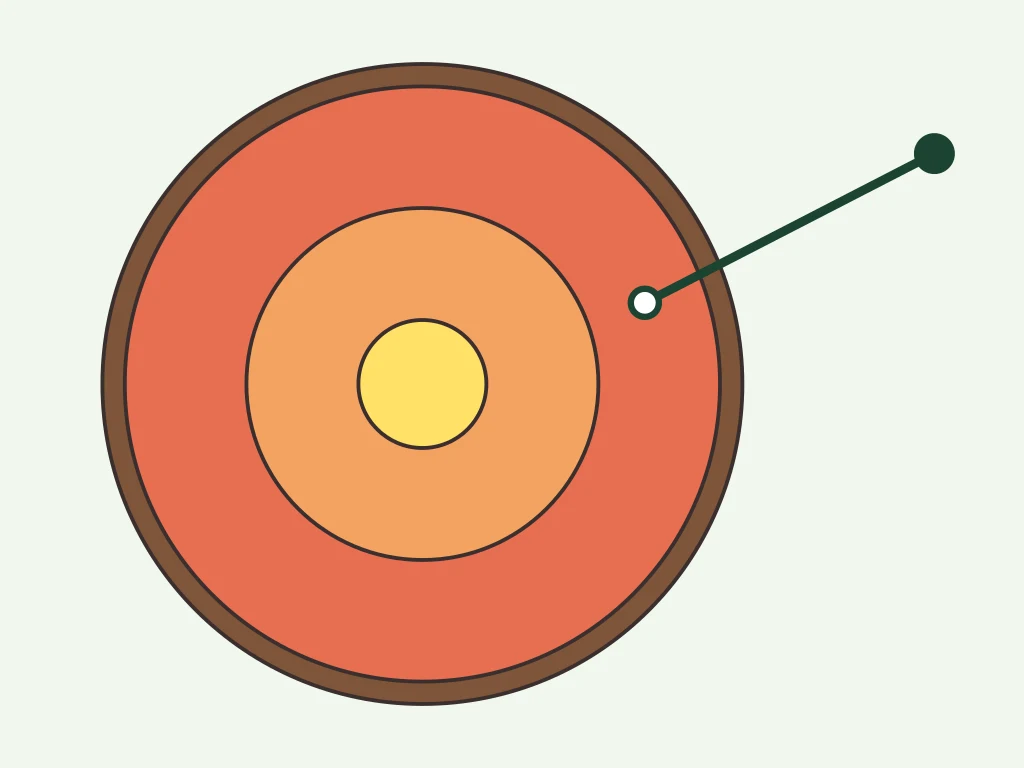
The arrow points to the thickest layer, about 2,900 km thick. What is it called?
Answer: The mantle
- 3
What is the Earth's thickest layer mostly made of?
- A deep sea of red-hot liquid lava
- Clouds of very hot gas and steam
- Hot solid rock that flows very slowly
- Loose sand and gravel
Answer: Hot solid rock that flows very slowly
- 4
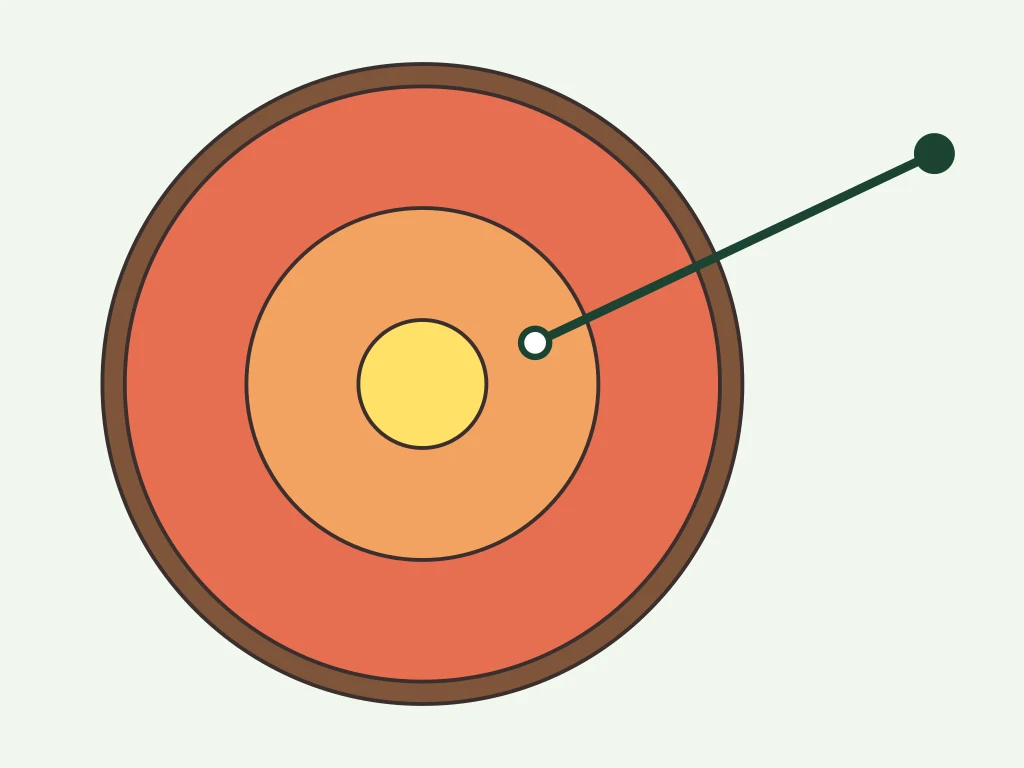
This layer is made of liquid metal. Which layer is the arrow pointing to?
- The crust
- The inner core
- The mantle
- The outer core
Answer: The outer core
- 5
Liquid metal moving deep inside the Earth gives our planet something a compass needs. What is it?
- A magnetic field
- Its day and night
- Its gravity
- Its seasons
Answer: A magnetic field
- 6
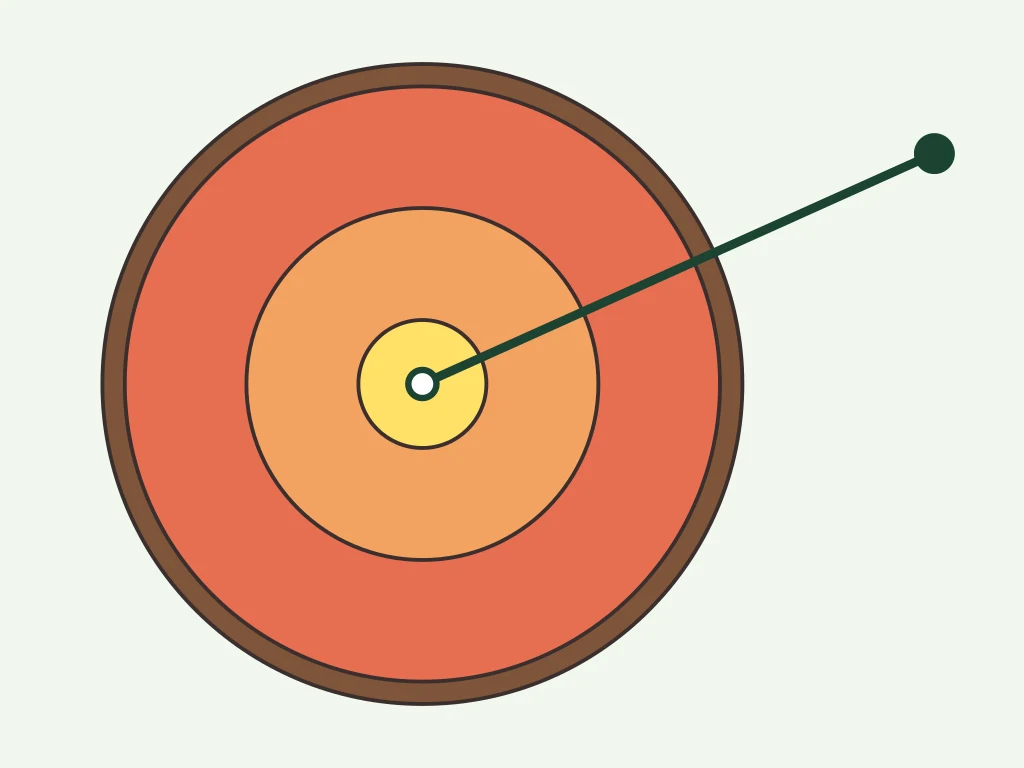
The arrow points to the very centre of the Earth. What is this layer called?
Answer: The inner core
- 7
The Earth's very centre is the hottest part, but it is solid. Why is it not liquid?
- It is colder than the crust
- It is made of stone, not metal
- Seawater cools it down
- The pressure there is enormous
Answer: The pressure there is enormous
- 8
The Earth's very centre is about as hot as...
- A candle flame
- A cup of tea
- A hot oven
- The Sun's surface
Answer: The Sun's surface
- 9
What is the Earth's core mostly made of?
- Gold and silver
- Iron and nickel
- Rock and sand
- Water and ice
Answer: Iron and nickel
- 10
About how far is it from the Earth's surface to its centre?
- About 6,400 km
- About 64 km
- About 64,000 km
- About 640 km
Answer: About 6,400 km
- 11
The Earth's outer shell is broken into giant pieces called tectonic plates. What is happening to the Atlantic Ocean as they move?
- It is getting narrower
- It is getting wider
Answer: It is getting wider
- 12
About how fast do the plates move?
- A few centimetres a year
- A few kilometres a year
- A few metres a day
- They never move at all
Answer: A few centimetres a year
- 13
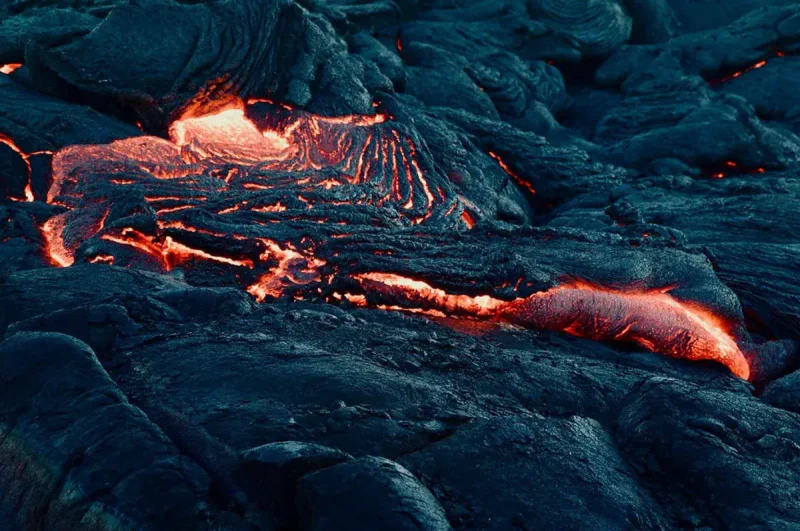
What do we call molten rock while it is still under the ground?
- Ash
- Lava
- Magma
- Steam
Answer: Magma
- 14
What do we call molten rock once it pours out of a volcano?
- Ash
- Lava
- Magma
- Soil
Answer: Lava
- 15
Where do most earthquakes and volcanoes happen?
- Near the North Pole
- Where lots of people live
- Where two plates meet
- Wherever it is very hot
Answer: Where two plates meet
- 16
Which instrument records the shaking of an earthquake?
- A barometer
- A seismometer
- A telescope
- A thermometer
Answer: A seismometer
- 17
How do scientists know what is deep inside the Earth?
- They guessed from the colour of rocks
- They have drilled a hole to the centre
- They sent a robot down to the core
- They study earthquake waves
Answer: They study earthquake waves
- 18
About 250 million years ago, almost all the land on Earth was joined in one giant continent. What do we call it?
- Antarctica
- Atlantis
- Eurasia
- Pangaea
Answer: Pangaea
- 19
Bonus: the plate carrying India has been pushing into Asia for millions of years. What has this made?
- The Amazon River
- The Himalayas
- The Pacific Ocean
- The Sahara Desert
Answer: The Himalayas